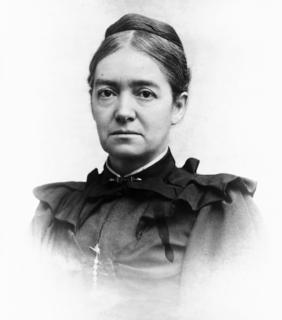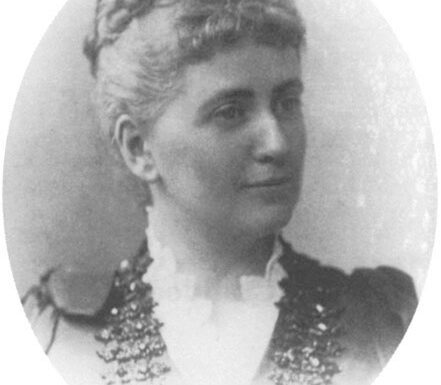
Dr. Anna Elizabeth Broomall

Anna Elizabeth Broomall (1847-1913) suffered name-calling, spit wads, and the anger of fellow male students in her battle to become a renowned physician of obstetrics. Anna Broomall was born in Upper Chichester, Pennsylvania to a well-to-do Quaker family. Her mother died in her infancy, and Broomall was raised by an aunt and uncle. Her father, John Broomall, a successful lawyer, and later U.S. Congressman, sent her to private academies in the area. She, at first, wanted to become a lawyer, but no opportunities existed at the time to study law. Instead, she decided to become a doctor. Her father, a supporter of women’s rights, encouragedRead More →
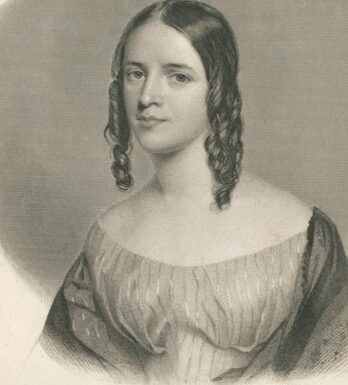
Elizabeth F. Ellet American writer

Throughout history, many important accomplishments by women have been overshadowed by the so-called scandalous things they have reportedly done. Elizabeth Fries Ellet (October 18, 1818 – June 3, 1877) is a perfect example of this. A noted writer and historian of her time, whose wide-ranging work is still consulted today, Ellet has gone down in history, not as a gifted writer, but as one contemporary blog maintains, “a bad woman.” This is despite the fact that all accounts of her “nasty” behavior were recorded by the men directly involved in the scandal. Ellet’s Background Born in Sodus, New York to a well-to-do physician’s family, ElletRead More →

Alice Moore Hubbard

A bold feminist, suffragette, and writer, Alice Moore Hubbard (1861 – 1915) considered herself one of the “New Women” at the turn of the century. Early Life Born on a small farm in Wales, New York, Alice Hubbard desperately wanted to be a teacher. Through effort and economizing, she attended the State Normal School in Buffalo, New York, followed by the New Thought Emerson College of Oratory in Boston. Following her graduation she taught at East Aurora College in New York. In 1885, Elbert Hubbard founded the William-Morris-inspired Roycraft, an Arts and Crafts community and publishing company, in East Aurora, where Alice met him. TheRead More →

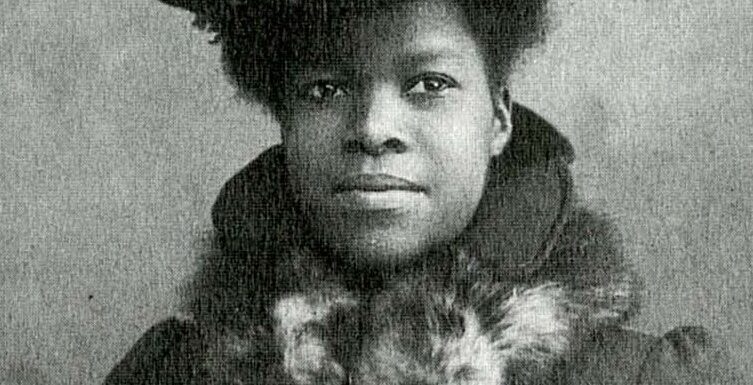
Nannie Helen Burroughs

Nannie Helen Burroughs (May 2, 1879 – May 20, 1961) was an educator, public speaker, and civil rights activist. Early Life Raised by her widowed mother, she grew up in Washington D.C. where she attended the M Street High School along with Anna J. Cooper and Mary Church Terrell. She graduated with honors in 1886 and applied to teach in the District of Columbia public schools. However, she was rejected because of her dark skin color. From 1898-1909, she worked as a secretary and bookkeeper for the Foreign Mission Board of the Baptist Convention. While there, she founded the Women’s Convention where she served asRead More →

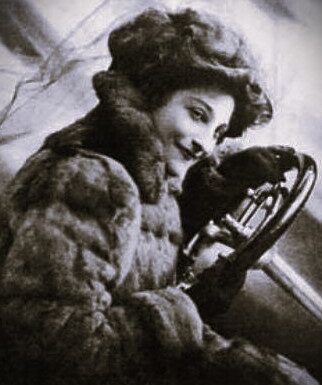
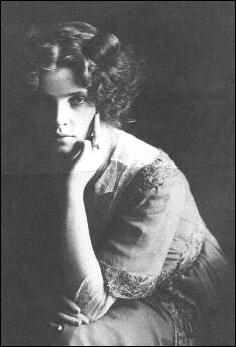
Dorothy Levitt

Called the “Fastest Girl on Earth”‘ and the “Champion Lady Motorist of the World, Dorothy Levitt (1882-1922) was Britain’s first female racing car driver. At a time when women were supposed to marry and stay at home, the unmarried Levitt offered a role model for the new independent Edwardian woman. Her opportunity to race came in 1902 when she was a secretary for the car-maker Napier and Son. The director, Selwyn Edge had a car salesman teach her to drive as a publicity stunt. But he didn’t reckon on her success as a race car driver. With her petite figure and stylish feminine dress, sheRead More →

Colonial era black woman

The women most often forgotten are those who come from times and places where they and their people are outcast and discriminated against. A resident of Hartford, Connecticut, Ann Plato (c. 1823 – ?) is one of these women. Although she was the first African American to publish a book of essays, very little is known about her. Researchers have identified her father, Henry Plato, as Native American, perhaps of the Algonquin, and her mother, Deborah, as African American. What little else we know of her comes from Reverend W. C. Pennington, pastor of the Colored Congregational Church of Hartford and first black graduate ofRead More →

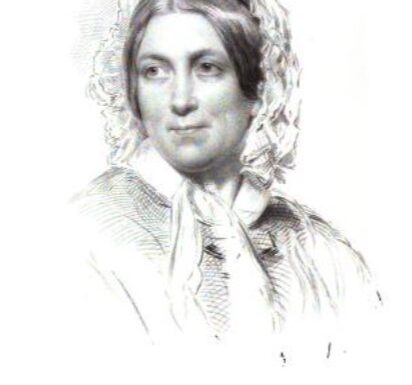
Harriet Martineau

Meet the woman who sold more novels than Charles Dickens. Harriet Martineau (1802 – 1876) was a British novelist, feminist, abolitionist, philosopher, travel writer, journalist, and more. She is considered the first female sociologist. Martineau struggled with ill health all her life. She had no sense of taste or smell and became partially deaf starting at age twelve. In her forties, she developed a uterine tumor that affected her for many years of her life. Nevertheless, she traveled widely and wrote extensively for over seventy-years, with major journeys to the United States and to Egypt and the Middle East. As girl, her mother tried toRead More →

Maud Allan Dancer

I am sure you have heard of the Dance of the Seven Veils, but do you know who created it? Dancer Maud Elizabeth Allan (c.1873- 1956), born Ulla Maud Durrant in Toronto, Canada, was raised in San Francisco. Musically talented on the piano, she went to Germany to study. While she studied there, her brother committed a brutal murder in San Francisco. Unable to return, she changed her name, and encouraged by the director of the Meister-schüle, gave up the piano and took up dancing professionally. For five years, she toured Europe dancing to classical music. In 1906, she performed the dance Salome based onRead More →

Mary Putnam Jacobi

When I was in high school, girls who had their period were allowed to sit out of gym. While that has certainly changed, the practice grew out of the 19th century belief that women were deathly sick during their menses. Most physicians believed that women did not have the strength to attend institutions of higher learning or pursue physical activity when menstruating and that they risked serious illness and even infertility unless they rested completely. One physician of the times did not. Dr. Mary Putnam Jacobi (1842-1906) was one of the few women to become a physician in the 19th century. Despite her father’s beliefRead More →

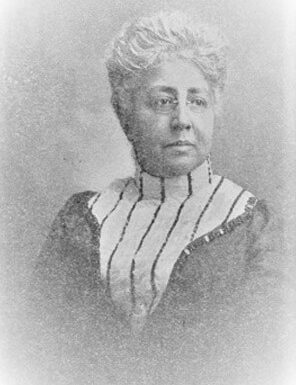
Josephina St. Pierre Ruffin

Born in Boston, Josephine St. Pierre Ruffin (1842-1924) grew up in a family of fighters for justice, her father a leader in the Black community. So, it is not surprising that she devoted herself to bettering the standing and power of 19th century black women throughout her life. As a young, newly married woman, she and her husband, the first black graduate of Harvard Law School, resettled in Liverpool, England to protest the Dred Scott decision, which solidified slavery in the United States. They returned at the start of the American Civil War to speak out for abolition and to recruit black men to serveRead More →

The Westbrook Drives

Henrietta Payne Westbrook (1834-1909) was a physician, reporter ,and author, who was also a close friend and early supporter of Ida Craddock, the heroine of my new novel Censored Angel: Anthony Comstock’s Nemesis. A believer in the right of a woman to choose her own husband, she was the free-love wife of the American secular advocate, Richard Brodhead Westbrook, a former minister, and later a lawyer and judge in Philadelphia. (Note: In a free-love marriage a couple choose to live as a married couple without benefit of a marriage license. For a definition see Free Love.) In 1880, Henrietta Westbrook graduated from Women’s Medical CollegeRead More →

Ida C. Craddock

Ida Celenire Craddock (1857-1902) was born into a world where middle class women were expected to have little ambition, dutifully marry, and keep their mouths closed about sex. Brilliant and constrained by a domineering mother, Ida wanted more from life. She wanted a career, and she wanted to be heard. So, she left home to teach stenography at Girard College, a school for orphaned boys and write stenography textbooks. She also applied to the University of Pennsylvania’s School of Arts and Sciences. In 1882, she passed the exams and was accepted by the faculty to be the first female undergraduate, but her application was rejectedRead More →