
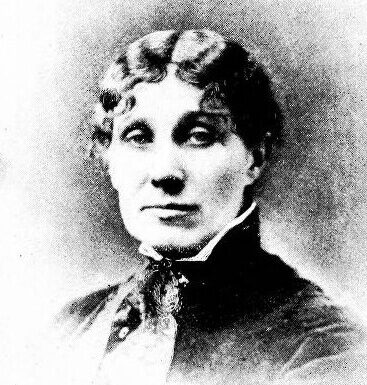
Erminnie Adele Smith (April 26, 1836– June 9, 1886) was a geologist, linguist, and anthropologist.
A CHILDHOOD ROOTED IN CURIOSITY
Born on April 26, 1836, in Marcellus, New York, Erminnie Adele Platt grew up just a stone’s throw from the Onondaga Iroquois reservation. Her world was one of endless questions and boundless wonder. Picture a young girl with her skirts muddied from afternoons spent collecting rocks and wildflowers, her pockets brimming with nature’s treasures. She attended the Troy Female Seminary, a rare opportunity for women at the time, where her hunger for knowledge only grew. Even as a child, Erminnie was never satisfied with surface answers. She wanted to dig deeper, always searching for the root of every subject she encountered.
A PASSION THAT FOUND ITS PLACE
Erminnie Smith’s love for gathering specimens wasn’t just a childhood pastime; it became the foundation of her life’s work. Imagine her out in the field, notebook in hand, cataloging geological formations or recording snippets of indigenous languages with meticulous care. She was fascinated by both stones and stories, both the physical world beneath our feet and the rich tapestry of human experience that wove through it.
MARRIAGE AND NEW BEGINNINGS
In 1855, Erminnie married Simeon H. Smith, a man whose own career as director of finance in Jersey City offered stability but also allowed Erminnie to pursue her unconventional passions. Together, they built a life that balanced tradition with intellectual adventure.
Wanting a better education for her four sons, Erminnie took them to Germany for their schooling. During that time, she became the first woman to complete a degree in geology at the School of Mines in Freiburg, Saxony. While there, she also studied crystallography and the amber fisheries. She remained fascinated by minerals and fossils all her life, amassing one of the largest geological collections in the United States. Her collection is now at Vassar College.

AN EARLY FEMALE FIELD ANTHROPOLOGIST
Erminnie didn’t just read about faraway peoples or distant lands—she went out into the world herself. At a time when women were rarely seen (let alone respected) as scientists or explorers, she ventured into fields dominated by men. Invited by the Smithsonian in 1880 to do research among the Iroquois, she took up residence and began studying the culture and language. She was impressed by the role of women in Iroquois society, where women could own property and had social freedoms that American and European women did not.
To complete her work on an Iroquois language dictionary, she became the first anthropologist to train native field assistants. Smith transcribed and classified over 15,000 words in Iroquois dialects. The Iroquois-English dictionary she prepared was published following her death. She was one of the first women to specialize in ethnographic fieldwork, and the first female officer of the Society for the Advancement of Science.
Her work among Native American communities earned her recognition as America’s first female field anthropologist: A title she wore not just as an honor but as an inspiration for all who followed.
Why Her Story Matters
Erminnie Adele Smith reminds us that curiosity is not just for children—and that asking “why” can lead us down paths no one has walked before. Her story is proof that passion paired with perseverance can break boundaries and change history.
The following excerpt is from the introduction to her book The Myths of the Iroquois.
The “Great Spirit,” so popularly and poetically known as the god of the red man, and the ” Happy Hunting-ground,” generally reported to be the Indian’s idea of a future state, are both of them but their ready conception of the white man’s God and Heaven. This is evident from a careful study of their past as gleaned from the numerous myths of their prehistoric existence.
It may be true that many of the first missionaries found them in possession of such ideas, but the Indians had long been in contact with white men from whom those ideas were obtained, and there was no incongruity in simply adding them to their former beliefs, as no fundamental change was required. They accepted the Great Spirit, but retained in many instances their former gods as his attributes, considering the thunder as his voice and the winds as his breath, and at the same time they introduced into their pagan worship a form of the trinity which is still preserved, consisting of the Great Spirit, the Sun, and Mother Earth.
Good and evil spirits also play an important role in Iroquoian mythology. Among the good spirits are the three sisters who still continue to preside over the favorite vegetables — corn, beans, and squashes. They are represented as loving each other very dearly and dwelling together in peace and unity. The vines of the vegetables grow upon the same soil and cling lovingly around each other. The spirit of corn is supposed to be draped with its long leaves and silken tassels. The sister who guards the bean has a wreath of its velvety pods with garments of the delicate tendrils, while the spirit of squashes is clothed with the brilliant blossoms under her care. In bright nights the sisters can be seen flitting about or heard rustling among the tall com. To this day yearly festivals are held in their honor, and they are appealed to as ” Our life, our supporters.”
Among the supernatural beings corresponding to good and evil genii were the Great Heads, with ever-watchful eyes, and long hair which served them as wings to bear them on missions of mercy or of destruction. This pure product of the Indian imagination figures largely in the unwritten literature of the Iroquois. There were also in those days stone giants, always the mortal enemy of man, but whose final extermination furnished the theme for wonderful stories of daring deeds performed oftentimes under the influence of charms or magic, but never in too marvelous a manner to disturb the credulity of the eager listener.
from The Myths of the Iroquois, 1883, pp. 52-53.
Works by Erminnie A. Smith
1883 Myths of the Iroquois. Second annual report of the Bureau of Ethnology, 1880-1881. Washington, D.C.: Bureau of American Ethnology, Smithsonian Institution. pp. 47–116.
1883 “The Iroquois” Science vol 2: No. 26, August 3, 1883.
LEARN MORE ABOUT ERMINNIE A. PLATT SMITH
In memoriam Mrs. Erminnie A. Smith. Marcellus, N.Y., April 26, 1837 – Jersey City, N.J., June 9, 1886. Boston: Printed for private circulation by Lee and Shepard. 1890.
“Now is my word! Next year! why, who knows what may be before next year?”
Erminnie Smith